Overview
Architected and implemented a comprehensive UI framework and design system for a global ERP suite, creating a themeable, accessible component library used across multiple enterprise applications. Designed and built custom UI paradigms including advanced data grids, tree views, navigation systems, and form controls serving thousands of enterprise users worldwide.
The system remains in production today as Thesis SM (Student Management), maintaining the original design with minimal changes over 11+ years—a testament to thoughtful architecture and forward-thinking design decisions.
The Challenge
Building an enterprise-class academic ERP system from the ground up with a small, Agile team—transforming from initial mobile-first prototypes in 2012 to a comprehensive cloud-based Student Management system serving institutions globally.
The challenge involved establishing consistent design patterns across dozens of complex features, maintaining usability while scaling functionality, and evolving the design through multiple rebrandings while preserving the core information architecture that made the system intuitive.
Approach
Foundation & Early Prototyping (2012)
Starting from published mobile design guidelines, designed common UI patterns working closely with Product Owners.
While stakeholders preferred high-fidelity, over traditional wireframes, I built valid HTML/CSS3/JS, functional interface prototypes, captured screenshots, and overlaid descriptive text to help drive design decisions and refinment.
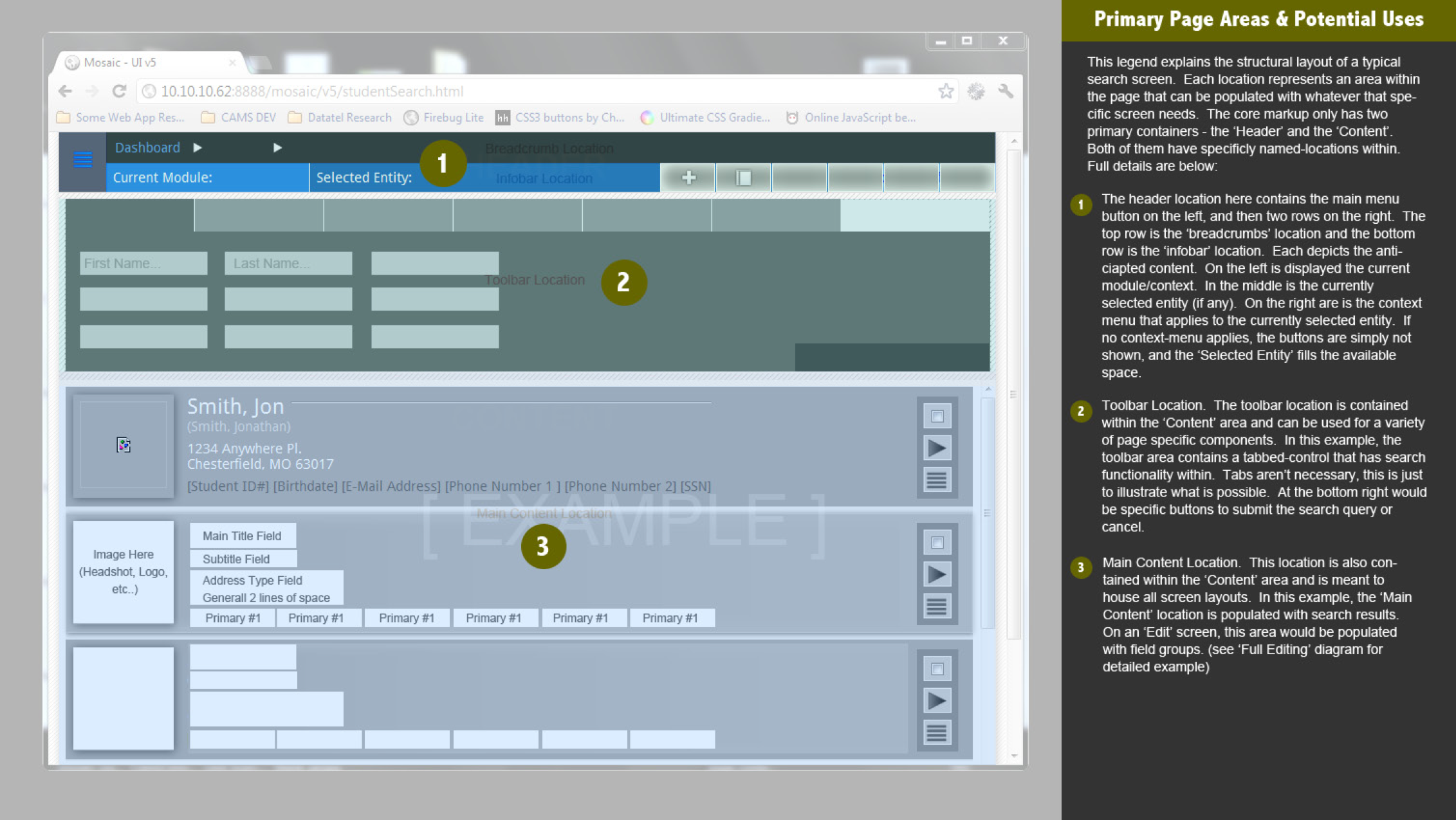
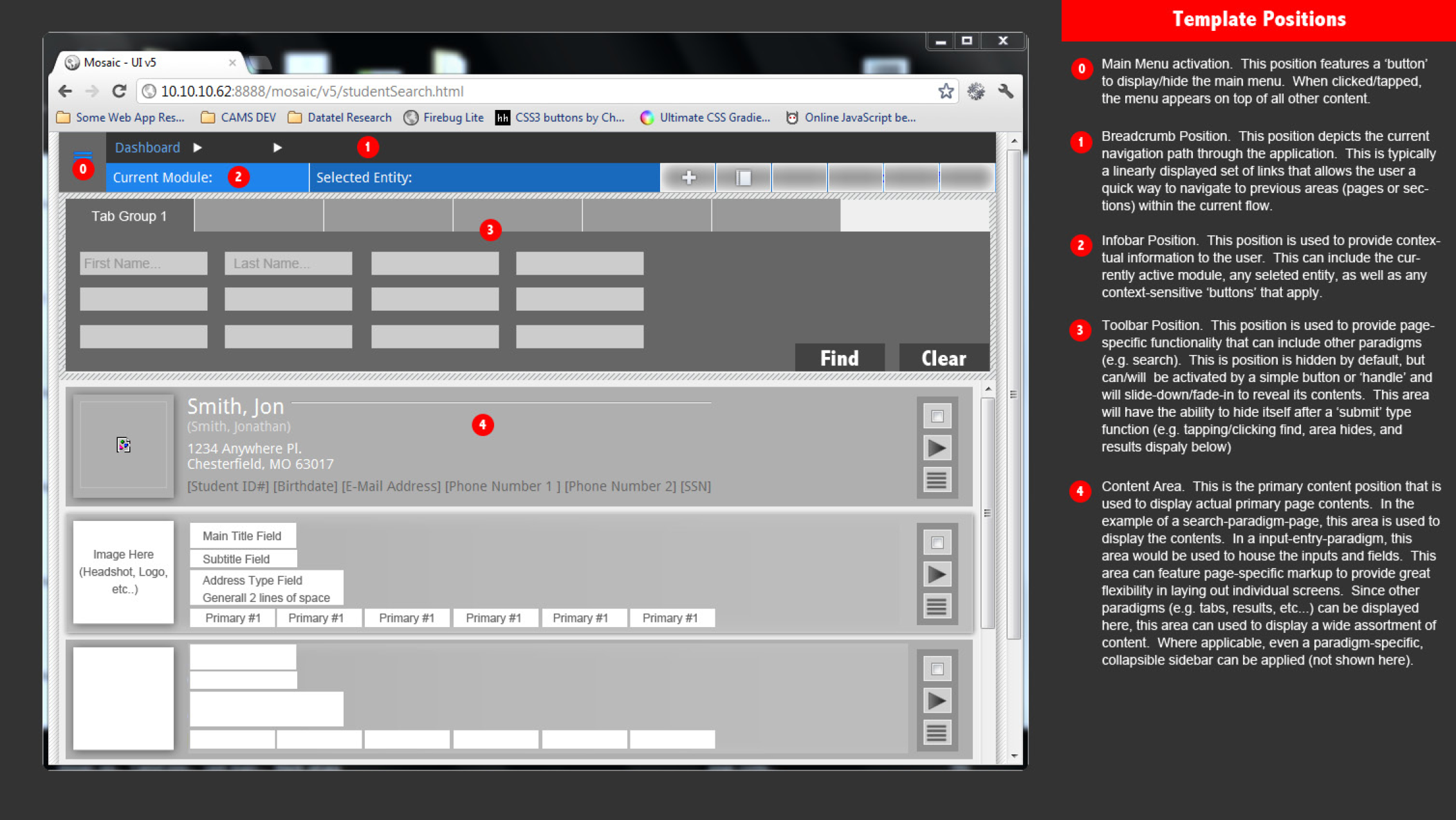
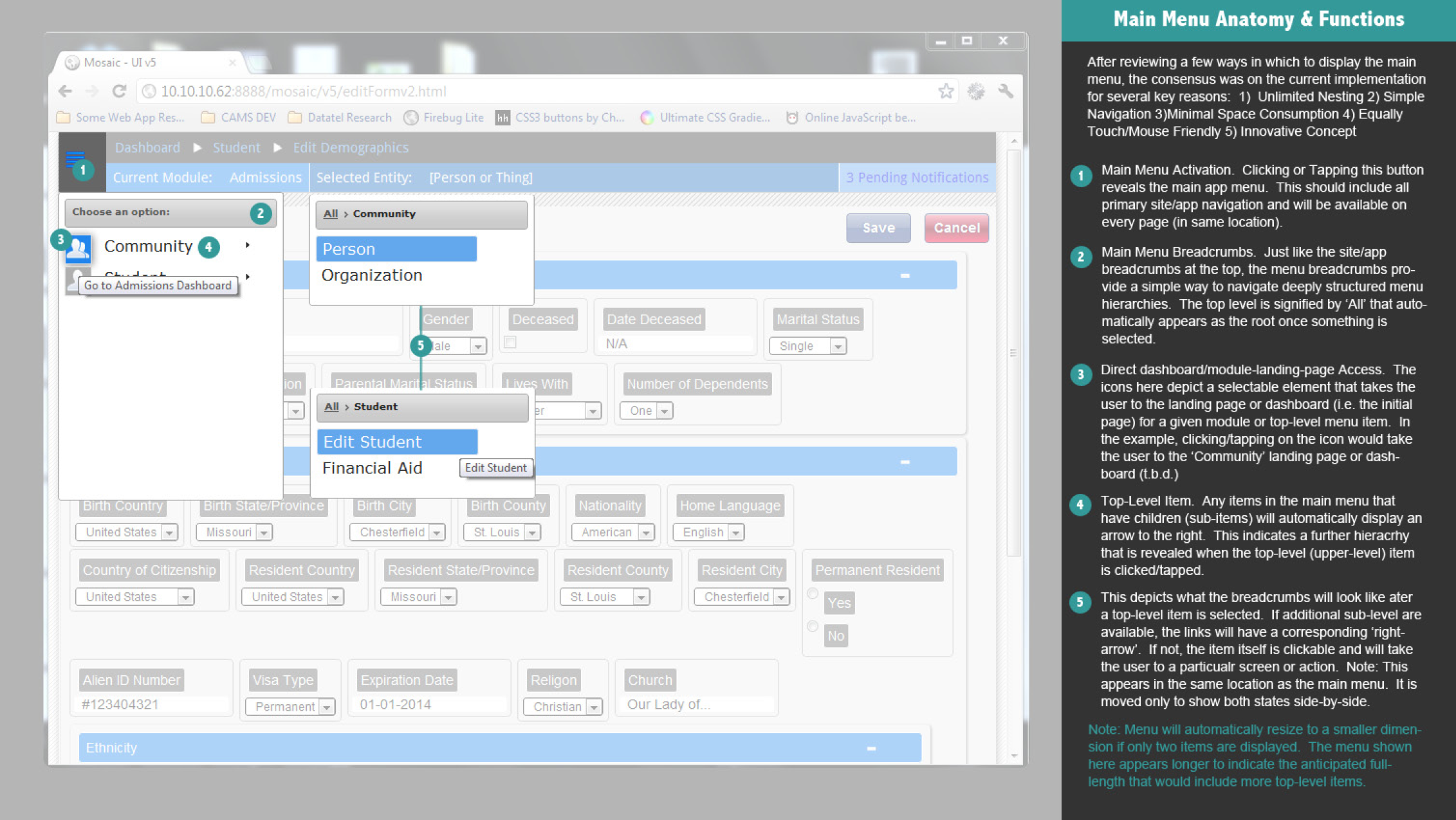
Primary Page Areas
First Production Version & Core Features (Late 2012-2013)
Built the first responsive, iPad-resolution layout tied to live data, establishing the foundation for key functionality including Billing, Student Registration, Guided Application, CRM v1, and a workflow ruleset builder.
Introduced CSS3-based theming capabilities allowing dynamic UI coloring through transparency and background gradients.
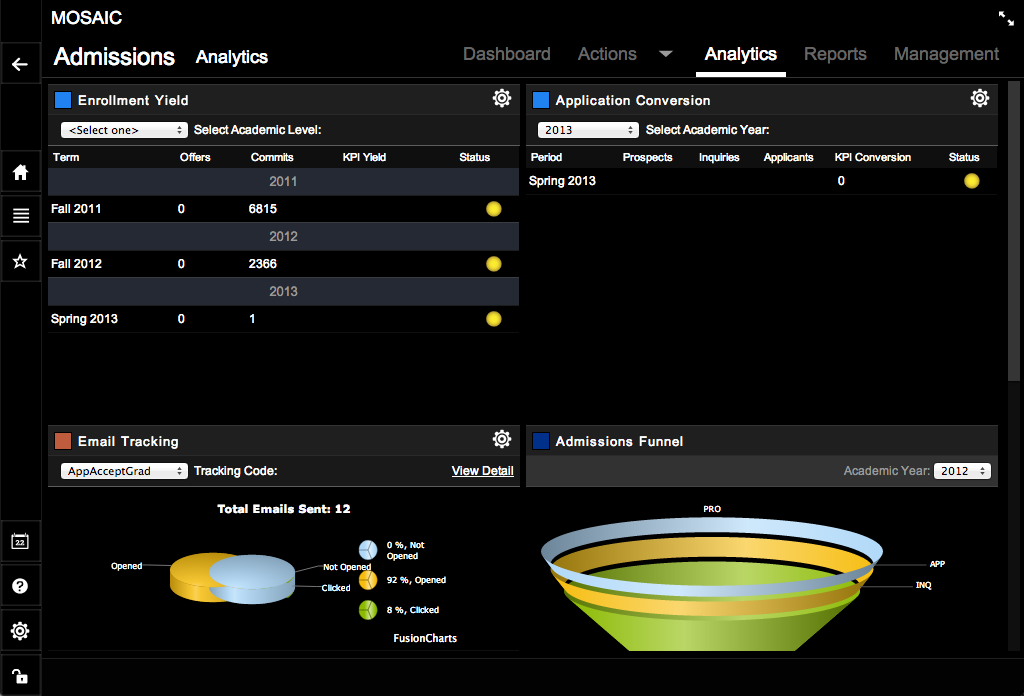
First production version on iPad (2013)
Refinement & Navigation Overhaul (2014)
Focused on improving existing usability, substantially redesigning the CRM module, and completely overhauling site navigation to handle growing feature complexity.
Added light theme support and presented new concepts at Users Conference, demonstrating the system's maturity and flexibility.
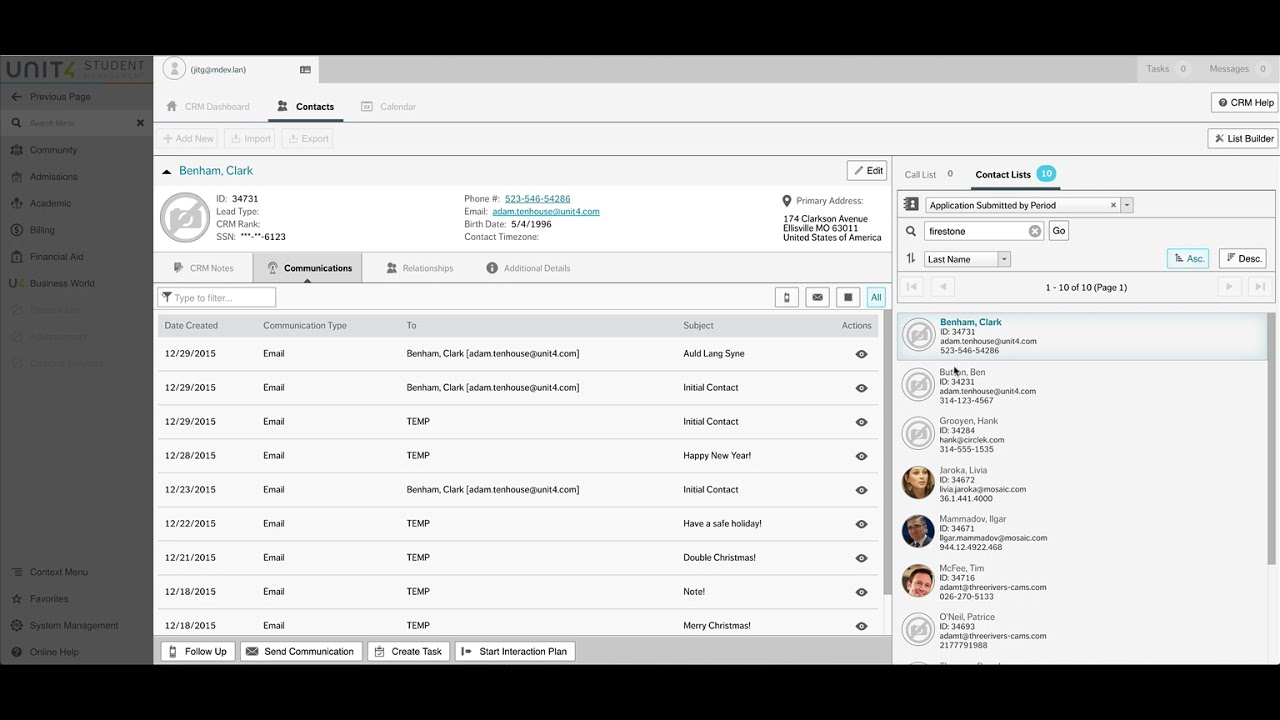
CRM module demo
Global Expansion & Unit4 Integration (2015-2018)
Following Unit4's acquisition of Three Rivers Systems, integrated with the global Unit4 Design System and brand while adding support for European locales.
Redesigned the login screen with dynamic locale-selection and led UI/UX for major features: Academic CRM, Student Registration, Transfer Courses, Degree Audit, Record Attendance, Grade Management, Analytics Dashboards, and Report Builder.

Login page now cycles through client logos
Enterprise Maturity & Final Rebranding (2018-2020)
Under new CEO leadership, delivered comprehensive rebranding updates on schedule for Q1 2020, completing the transformation from small product to a truly cloud-based, Enterprise-class Academic ERP.
Maintained design system integrity and component consistency across the expanded feature set while adapting to evolving brand requirements.
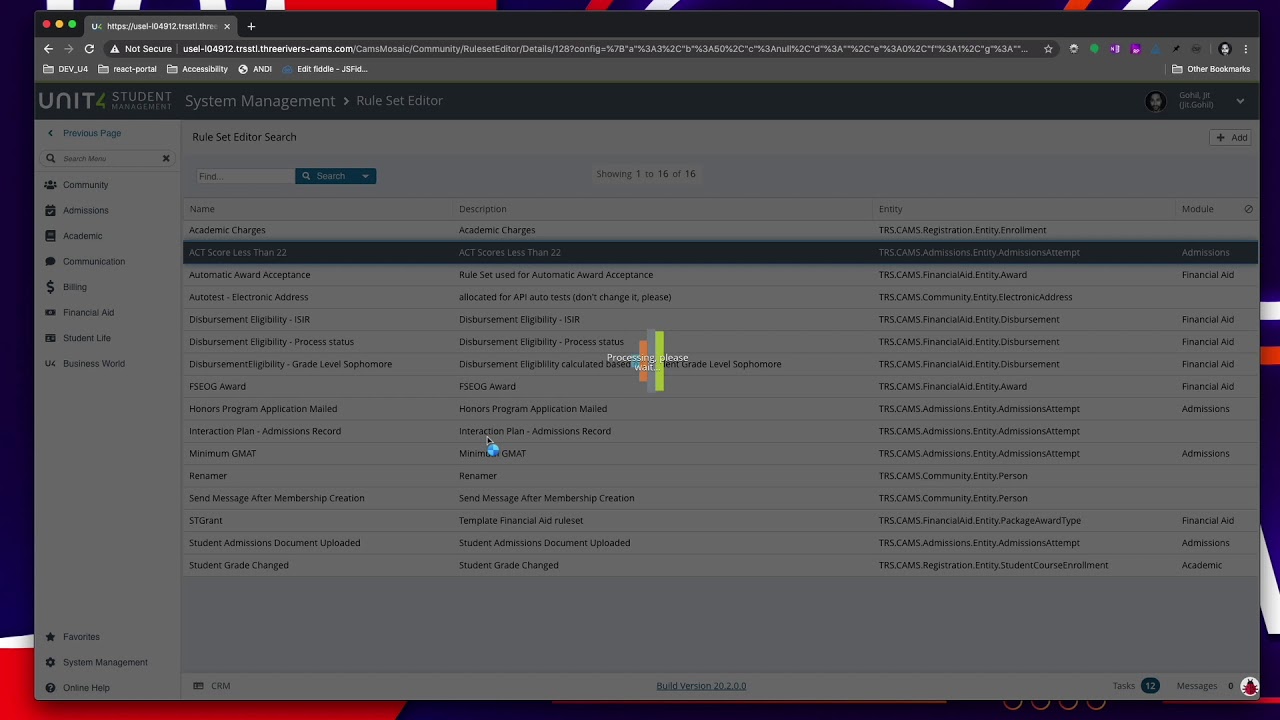
Updated to new Unit4 global branding
Live Demonstrations
19 video demonstrations showcasing custom UI components and paradigms built for the Unit4 design system.
Results & Impact
11+ years
Still in production as Thesis SM
Minimal changes
Original design remains intact
Light/Dark
Fully themeable system
Enterprise
Global student management system
Technologies Used
Key Learnings
Building for longevity requires anticipating future needs while solving current problems—thoughtful architecture decisions made in 2013 enabled the system to remain relevant and functional 11+ years later
Design systems that prioritize fundamentals over trends age better—focusing on solid interaction patterns, accessibility, and theming creates lasting value
Stakeholder buy-in often requires meeting them where they are—high-fidelity prototypes built with production-ready code proved more persuasive than wireframes, even if unconventional, and accelerated the design-to-development pipeline
Small, Agile teams with strong collaboration between design and engineering can accomplish extraordinary scale—what began as mobile prototypes by a solo UI/UX resource evolved into an enterprise system serving institutions globally, proving that team dynamics and methodology matter more than headcount